

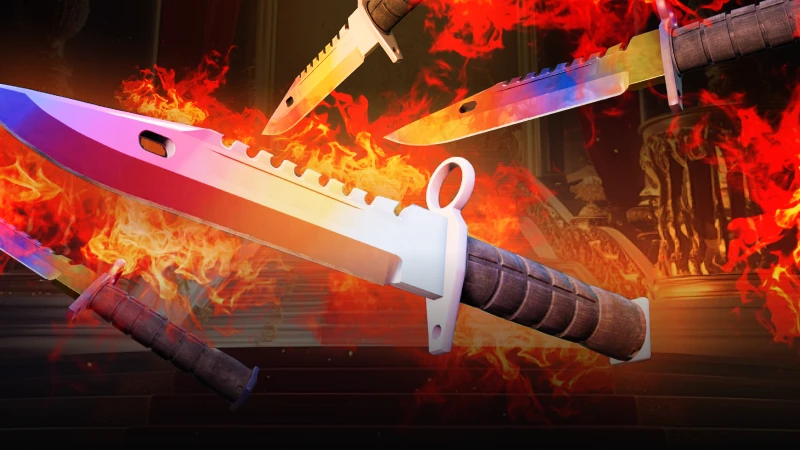
A few knives compare to the Bayonet Fade in elegance and style for CS2 knives. It’s not just a weapon — it’s a statement. Whether you’re a collector hunting that perfect Full Fade (100%) or a player who adores the warm purple-gold gradient of an 80% Fade, this knife tells all the story you must have for skin aesthetics in Counter-Strike. In this article we’re going to dissect the best Bayonet Fade patterns, show you how to spot fade percentages, and share what makes some versions worth a few thousand more than others. If you’re in pursuit of a Fade that will make people look at the server (and in your inventory, a good way to do that is to get your hands on a specific version of the Fade).
Why Bayonet Fade Is One of CS2’s Most Iconic Knives
The Bayonet Fade is not just the next shiny knife in CS2 — it’s the legend of CS2. One of the most popular styles in the whole game’s history (even back in early CS:GO days, the Fade finish was still one of the most popular designs ever developed in CS:GO).
The colors are hypnotic — yellow, pink, and purple create a gradient that looks almost palpable under varying lighting conditions in a hypnotic palette of color combinations. Combine that with the Bayonet’s military-inspired form and you’ve one of the cleanest, most balanced designs ever made. Bayonet Fade continued its success and held its status amid shifting CS2 scenery starting from 2025. This skin hovers in its own sphere of power for collectors seeking the ultimate full fade — or traders looking for a decent investment.
What Is a Bayonet Fade in CS2?
A “Fade” pattern, refers to a distinctive finish where the blade goes from crisp gold into a deep purple. Each Bayonet Fade is unique because it places the gradient depending on its pattern index — a hidden number that determines how much of each color it displays.
A perfect Fade, known as “Full Fade”, will coat almost its entire blade in all three colors — balancing out the gradient just right from top to bottom. With lower fade percentages (say 85% or 80 per cent, for example), less pink or purple close to the tip is evident, producing a different, yet still incredible aesthetic.
The Fade Percentage Explanation: Full Fade vs 90% vs 80% Patterns.
The fade percentage is what really determines how good a Fade looks — and what it is worth. It’s not an official number that’s actually shown within the game: it’s a visual rating the community makes.
100% Full Fade: The Holy grail. All colors (yellow, pink, purple) fully visible. Often priced at a premium.
95% Fade: Extremely close to full, only lightly colored as purple. This is hard to see unless compared directly.
90-85% Fade: It’s still pretty, but the purple part is a little smaller. Also usually more affordable and ubiquitous.
80% Fade: Significantly less gradient, largely in gold and pink tones — still very eye-catching but it’s not as much; however, it is quite good either.
The difference between a full fade and an 80% fade can be hundreds of dollars in value. Collectors will frequently chase those near-perfect fades, and the casual player will find mid-range fades more affordable.
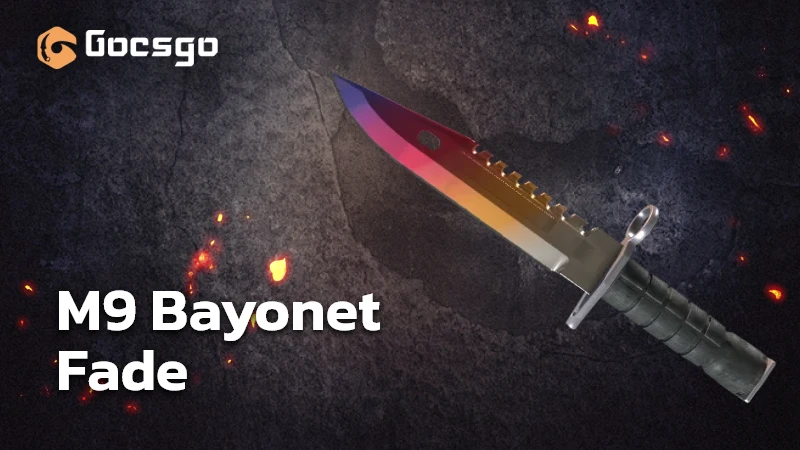
Best Bayonet Fade Patterns
Now, consider the more noticeable patterns. But every Bayonet Fade is good but the colors of some patterns stand out through their balance of colors and brightness;
Full Fade (Pattern Index: 413, 419, 420). The true king. The blade glimmers with gold, pink and purple transitions. These are the ones everyone wants — extremely rare and expensive.
95% Fade (Pattern Index 182, 183). Slightly less purple but incredible in CS2’s light. Beauty at an affordable price point.
90% Fade (Common Indexes: 28x-29x). These are the easiest Fades to buy. Not nearly as pink at the end but still lively.
80% Fade (Pattern Index: 400–405). Players who take that much warmer tone — more gold and pink, less purple. Great when it comes to bright maps or high-brightness maps like Mirage or Dust2.
If you would like to know whether buying the Bayonet Fade was better than buying other Fade knives? If you were to compare the Bayonet Fade to another Fade Knife, Karambit Fade, M9 Fade, Butterfly Fade, etc., it actually falls in a balance. The Bayonet isn’t as expensive as Butterfly or Karambit Fades but is still very visual and investment.
Karambit Fade: More expensive, rare, curved design with reduced surface area.
Butterfly Fade: Sharp and smooth animations but very expensive.
M9 Fade: Broader, looks stronger, slightly additional value owing to its rarity.
For most collectors, it is both balanced, timeless and affordable and a great compromise for those in need. If you will invest your first time purchasing a Fade knife in CS2, the Bayonet Fade is the perfect entry point. It has elegance, familiar appeal, and it tends to lose value over time—less money means less damage than Fade knives from other Fade skins that might go away someday soon enough.
Conclusion
After all, at the end of the day, every Bayonet Fade has a charm of its own — a Full Fade pattern, or an 80% — even if not a perfect 80%, with its deep pink and gold tones. What’s important is that you are simply finding the perfect one that speaks to you. And that’s its good; the same holds true for a combination of fade colors. You can have some die-hard perfectionists, but some players like the simple, balanced subtle fade—and that’s the beauty in it. If you’re going to buy, sell or just look up top sellers of Bayonet Fades to watch out for, pay attention always to pattern ID numbers, fade percentage numbers, and market timing. Who knows — in your next unbox the next great Fade might well be waiting for you!
FAQ
Q1: What is the top Bayonet Fade pattern?
A: Pattern indexes 413, 419, and 420 are “Full Fades” — the highest ranking listings for collectors.
Q2: How to calculate my Fade %?
A: Use community tools such as CSFloat or Skinport preview to analyze color coverage.
Q3: Is my Fade affected by lighting?
A: Yes, the colors of the Fade knives are very different in certain in-game lighting conditions — the gold and pink tones are magnified in brighter maps.